Topic Hub

AI Coding Agents

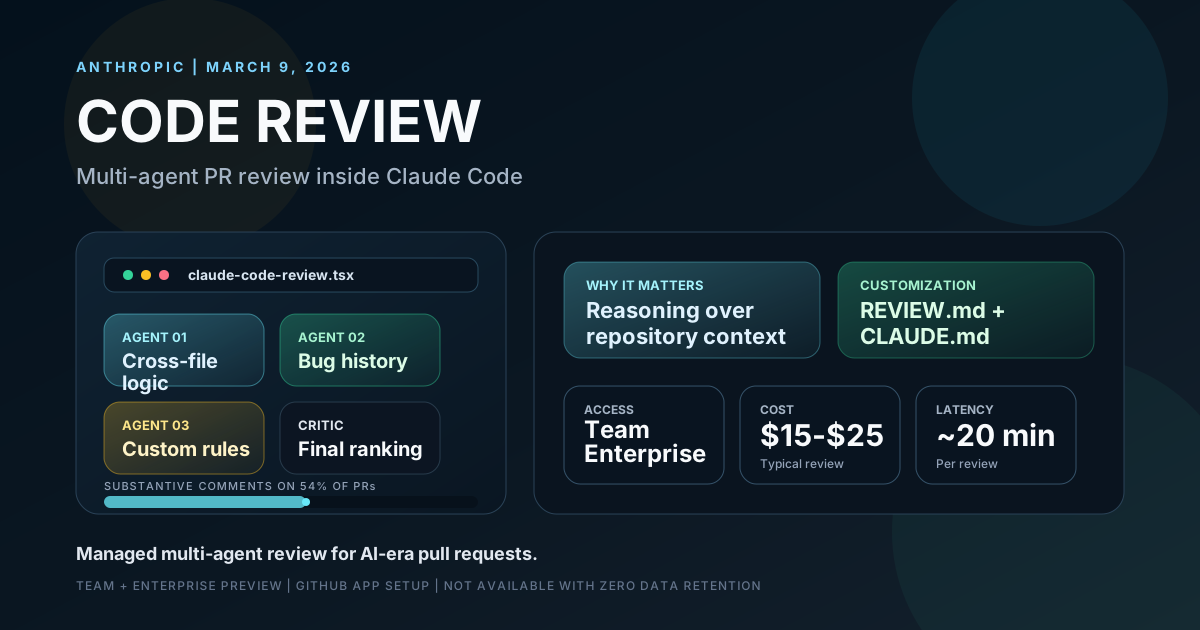
AI coding agents represent the next shift in software development — systems that don't just complete code but take multi-step actions: running tests, opening pull requests, fixing failing CI, and iterating without waiting for human prompts. These articles cover the architecture, security implications, enterprise deployment patterns, and the competitive landscape of autonomous coding tools.

AI Agents Agentic AI AGENTS.md Enterprise AI MCP

Articles 5

Frequently Asked Questions

What are AI coding agents?

AI coding agents are AI systems that autonomously write, review, test, and deploy code by taking multi-step actions in a development environment. Unlike simple code completion, they run commands, read documentation, make pull requests, and iterate based on test results or feedback — operating with a degree of autonomy rather than completing a single prompt.

What is AGENTS.md and why does it matter for AI coding agents?

AGENTS.md is a project-level instruction file — similar in concept to a README — that tells AI coding agents how to work within a specific repository. It documents coding conventions, forbidden operations, context about the codebase, and agent-specific instructions. Well-written AGENTS.md files reduce agent errors and produce more consistent results without requiring explicit prompting each session.

What security risks do AI coding agents introduce in enterprise environments?

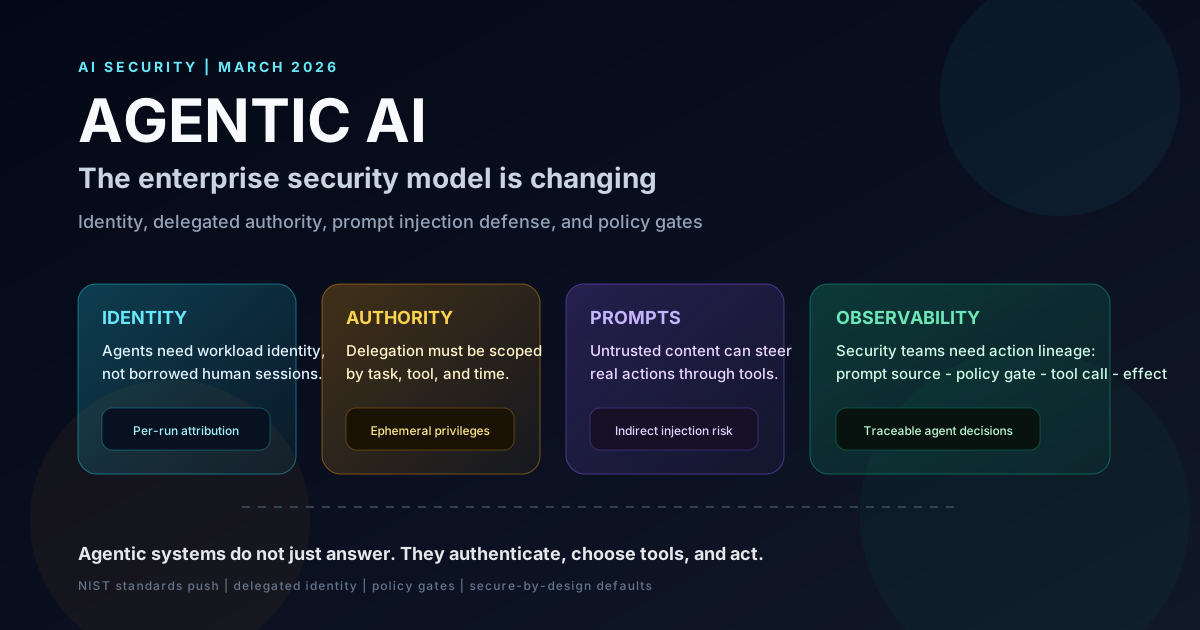
AI coding agents face several enterprise security risks: prompt injection (where malicious content in code, documentation, or issues hijacks agent actions), over-permissioned tool access, supply chain attacks via crafted dependencies, and data exfiltration through agent outputs. Secure deployments require sandboxing agent execution, scoping tool permissions, and requiring human approval for sensitive operations like deployments or secrets access.

How are major AI companies positioning themselves in the AI agent space?

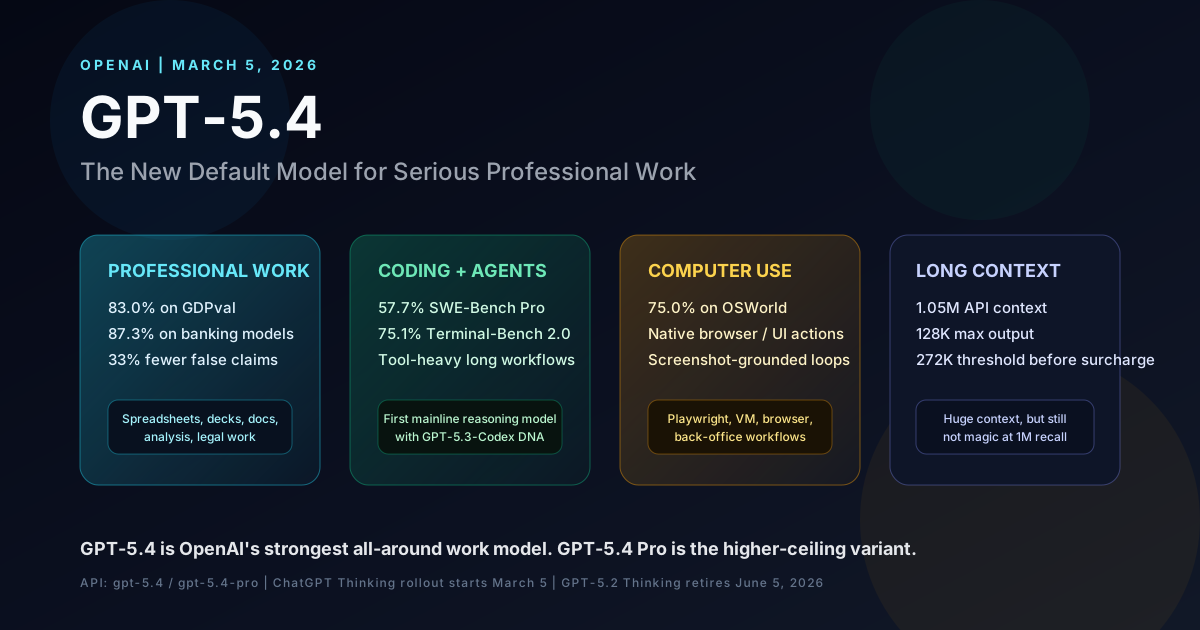
Anthropic, OpenAI, and NVIDIA are each building distinct agent platforms. Anthropic focuses on Claude Code for developer workflows and the Model Context Protocol (MCP) for tool standardization. OpenAI is embedding agent capabilities directly into GPT-5 models. NVIDIA's OpenClaw targets enterprise agentic orchestration at scale. The Model Context Protocol is emerging as a cross-vendor standard for connecting agents to tools and data sources.